Posts tonen met het label Geleend of Gestolen. Alle posts tonen

zondag 23 december 2012

Deep Purple's Black Night - de Riff


"Black Night" staat op die fantastische Deep Purple elpee "In Rock" De song drijft op een fantastische riff gespeeld door gitarist Ritchie Blackmore .

Waar komt dat vandaan ?

Welnu, riff en intro zijn een getrouwe kopie van de basriff van Summertime van Rick Nelson ('62). Dat zegt Ritchie Blackmore in een BBC documentaire, en hij kan het weten.

Rick Nelson - Summertime


Deep Purple - Black Night.


woensdag 11 juli 2012

Kokomo Arnold - Milk Cow Blues (1934)


Kokomo Arnold - Milk Cow Blues (1934)

Opgenomen op 10 september 1934 voor DECCA Records in Chicago.

Elvis Presley had al een versie van de song opgenomen voor SUN, onder de titel "Milk Cow Blues Boogie" in 1954.

Ook Bob Dylan kende de song. Zo goed zelfs dat de eerste strofe van zijn song "Quit your lowdown Ways" uit 1963 letterlijk is overgenomen uit Kokomo Arnolds blues.

"Quit your lowdown ways" was een "Freewheelin" outtake en kwam pas uit op "The Bootleg Series, Vol 1-3 : Rare and Unreleased" van 1991.

"Oh, you can read out your Bible
You can fall down on your knees, pretty mama
And pray to the Lord
But it ain’t gonna do no good

You’re gonna need
You’re gonna need my help someday
Well, if you can’t quit your sinnin’
Please quit your low down ways"

Luister maar.

Kokomo Arnold - Milk Cow Blues


maandag 21 mei 2012

Bob Dylan - Who killed Davey Moore ? (1963)


Who killed Davey Moore – Bob Dylan (1963)

Who killed Davey Moore
Why an’ what’s the reason for?

“Not I,” says the referee
“Don’t point your finger at me
I could’ve stopped it in the eighth
An’ maybe kept him from his fate
But the crowd would’ve booed, I’m sure
At not gettin’ their money’s worth
It’s too bad he had to go
But there was a pressure on me too, you know
It wasn’t me that made him fall
No, you can’t blame me at all”

Who killed Davey Moore
Why an’ what’s the reason for?

“Not us,” says the angry crowd
Whose screams filled the arena loud
“It’s too bad he died that night

But we just like to see a fight
We didn’t mean for him t’ meet his death
We just meant to see some sweat
There ain’t nothing wrong in that
It wasn’t us that made him fall
No, you can’t blame us at all”

Who killed Davey Moore
Why an’ what’s the reason for?

“Not me,” says his manager
Puffing on a big cigar
“It’s hard to say, it’s hard to tell
I always thought that he was well
It’s too bad for his wife an’ kids he’s dead
But if he was sick, he should’ve said
It wasn’t me that made him fall
No, you can’t blame me at all”

Who killed Davey Moore
Why an’ what’s the reason for?

“Not me,” says the gambling man

With his ticket stub still in his hand
“It wasn’t me that knocked him down
My hands never touched him none
I didn’t commit no ugly sin
Anyway, I put money on him to win
It wasn’t me that made him fall
No, you can’t blame me at all”

Who killed Davey Moore
Why an’ what’s the reason for?

“Not me,” says the boxing writer
Pounding print on his old typewriter
Sayin’, “Boxing ain’t to blame
There’s just as much danger in a football game”
Sayin’, “Fistfighting is here to stay
It’s just the old American way
It wasn’t me that made him fall
No, you can’t blame me at all”

Who killed Davey Moore
Why an’ what’s the reason for?

“Not me,” says the man whose fists
Laid him low in a cloud of mist
Who came here from Cuba’s door

Where boxing ain’t allowed no more
“I hit him, yes, it’s true
But that’s what I am paid to do
Don’t say ‘murder,’ don’t say ‘kill’
It was destiny, it was God’s will”

Who killed Davey Moore
Why an’ what’s the reason for?


David S. “Davey” Moore ( 1November  1933 –  25 Maart 1963) was een Amerikaans bokser.

Hij stierf op 25 Maart 1963 als gevolg van de verwondingen die hij opliep tijdens de kamp tegen  Sugar Ramos.

Het gevecht tegen de Mexicaan Sugar Ramos was eerst gepland in juli 1962 in het Dodger Stadium, maar een hevige tyfoon-achtige regenbui over LA. Besliste er anders over. Het gevecht werd uitgesteld naar 21 Maart 1963.

De kamp werd uitgezonden op de nationale televisie. De sfeer in het stadion was elektrisch, het geluid van de conga drums vulden de atmosfeer en de algemene houding tegenover Davey Moore was vijandig. De vele Latinos kozen de zijde van Sugar Ramos.


In de tiende ronde belandde een krachtige rechtse tegen het hoofd van Moore die achterover viel.  Hij viel op het onderste touw dat waarschijnlijk zijn hersenstam beschadigde. Hij verloor het gevecht op Knock-out, maar was toch nog in staat om een helder interview te geven voordat hij de ring verliet.

In de kleedkamer viel hij in coma. Hij zou er nooit meer uit ontwaken.

Bob Dylan schreef “Who killed Davey Moore”  over deze gebeurtenis. Ook Phil Ochs schreef een “topical song” over hetzelfde feit.

De inspiratie voor Dylan’s song komt uit de folk traditie.


Hij “ontleent” de gedachte en de struktuur vande song aan “”Who Killed Cock Robin” ( Roud Folk Song Index nummer  494).

“Who Killed Cock Robin” is een zgn “children’s song” die terug gaat op eeuwenoude traditie. De oorsprong van de song gaat terug tot in 1508, Het aftelrijmpje wordt als archetype gebruikt in vele “murderballads” .

Dylan kende het waarschijnlijk in de uitvoering van John Jacob Niles die het opnam in 1962.

Ik voeg er ook de versie van Peggy Seeger bij, ook uit 1962.

Dylan’s song werd pas officieel uitgebracht op “The Bootleg Series Volumes 1–3 (Rare & Unreleased) 1961–1991″  in 1991.

Ter vergelijking is hier Phil Ochs’ song.

Davey Moore – Phil Ochs

It was out to California young Davey Moore did go,
to meet with Sugar Ramos and trade him blow for blow
He left his home in Springfield, his wife and children five;
the spring was fast approaching, it was good to be alive.
His wife, she begged and pleaded, “You have to leave this game.
Is it worth the bloodshed and is it worth the pain?”
But Davey could not hear above the cheering crowd
He was a champion, and champions are proud.

Hang his gloves upon the wall, shine his trophies bright clear,
another man will fall before we dry our tears
For the fighters must destroy as the poets must sing,
as the hungry crowd must gather for the blood upon the ring.

And thousands gave a roar when Davey Moore walked in,
Another man to beat, another purse to win
And all along the ringside, a sight beyond compare
the money-chasing vultures were waiting for their share,
He stood there in his corner and he waited for the bell;
the signal of the struggle of two men facin’ hell;
and when the bell was sounded, the blows began to rain,
And blows will lead to hate — hate drives men insane.

Hang his gloves upon the wall, shine his trophies bright clear,
another man will fall before we dry our tears
For the fighters must destroy as the poets must sing,
as the hungry crowd must gather for the blood upon the ring.

The fists were flying fast and hard, the sweat was pouring down,
And Davey Moore grew weaker with ev’ry passin’ round.
His legs began to wobble and his arms began to strain,
He fell upon the canvas floor, a fog around his brain.
At last the fight was over, young Davey fought no more,
He lost the final battle behind a doctor’s door.
And back at the arena, the screaming crowd is gone,
and death is waiting ringside, for the next fight to come on.

Hang his gloves upon the wall, shine his trophies bright clear,
another man will fall before we dry our tears
For the fighters must destroy as the poets must sing,
as the hungry crowd must gather for the blood upon the ring.


Hier zijn dus :

John Jacob Niles – Who killed Cock Robin ?


Peggy Seeger – Who killed Cock Robin ?


Bob Dylan – Who killed Davey Moore ?


Phil Ochs - Davey Moore


Het verhaal van Cock Robin door Walt Disney :


dinsdag 8 mei 2012

Bob Dylan - I Pity The Poor Immigrant (1968)


We gaan even verder in op de vorige post over "the Ballad of Donald White"


I Pity The Poor Immigrant (1968)

I pity the poor immigrant
Who wishes he would’ve stayed home
Who uses all his power to do evil
But in the end is always left so alone
That man whom with his fingers cheats
And who lies with ev’ry breath
Who passionately hates his life
And likewise, fears his death

I pity the poor immigrant
Whose strength is spent in vain
Whose heaven is like Ironsides
Whose tears are like rain
Who eats but is not satisfied
Who hears but does not see
Who falls in love with wealth itself
And turns his back on me

I pity the poor immigrant
Who tramples through the mud
Who fills his mouth with laughing
And who builds his town with blood
Whose visions in the final end
Must shatter like the glass
I pity the poor immigrant
When his gladness comes to pass


Dylan leende de melodie van een traditionele Schotse ballad “Tramps and Hawkers.”

De oudste opgenomen versie is van Jimmy McBeath uit 1951, opgenomen door Alan Lomax .

Schotse come-all-ye. Zou kunnen doorgaan als het lijflied van de doorwinterde trapper, trekker, traveller, tramp, hobo, hawker of hoe je ze ook noemen wil.

Jimmy McBeath werd geboren in Portsoy, Banffshire, in 1894. Na school werd hij hulpjongen op de boerderij.

Volgens Jimmy was het “All hard slavery work – up at five in the morning to sort your horse, and you didn’t fasten your boots until after you got your breakfast.  You went in at half past five and got a cog o’ meal and milk and bread, oat-cakes and a cup o’ tea wi’ it.  You had to carry on fae that, from six till twelve o clock and started again tae one.  You stopped at six and came in and sorted your horse and then you went away to your tea at twenty minutes to seven at night.  Some farms were very tight wi’ the food, oh yes, very, very, very tight wi’ the food.  Some farms were very good wi’ the food again.  But it was slavery days all the same.  You workit the whole six months before you got money at all.”

Jimmy werd lid van de Gordon Highlanders in 1914, waarschijnlijk om aan het zware boerenwerk te ontsnappen, en diende aan het front in Vlaanderen en in Ierland. Later werd hij een straat zanger na een suggestie van Geordie Stewart, een schroot-dealer die de broer van Lucy Stewart, de fijne ballad zanger van Fetterangus.

Jimmy werd ontdekt in 1951 door Alan Lomax en Hamish Henderson die deze opname maakten.


Jimmy McBeath - Tramps and Hawkers


Bob Dylan - I Pity the Poor Immigrant


Bob Dylan - The Ballad Of Donald White (I guess you’ll feel much better when I’m on that hanging tree)


Woody Guthrie zou tegen Dylan gezegd hebben tijdens een van diens bezoekjes : “The words are the important thing. Don’t worry about tunes. Take a tune – sing high when they sing low, sing fast when they sing slow, and you’ve got a new tune.”

Dylan heeft dit goed begrepen, en alles wat op hem afkwam als een spons opgenomen.

Voor de song horen we Dylan zeggen : “I took this from Bonnie Dobson’s tune, “Peter Amberly”, I think the name of it is….”

My name is Donald White you see, i stand before you all
I was judged by you a murderer, the hangman’s knot must fall
I will die upon the gallows pole, when the moon is bright an’ clear
An’ these are my final words that you will ever hear.

If i had some education to give me a decent start
I might have been a doctor or a master in the arts
But i used my hands for stealin’ when i was very young
An’ they locked me down in jailhouse cells, that’s how my life begun.

Oh the inmates an’ the prisoners i found they were my kind
It was there inside the bars, i found my peace of mind
But the jails they were too crowded, institutions overflowed
So they set me loose to walk upon life’s hurried tangled road.

An’ there’s danger on the ocean where the salt sea waves split high
An’ there’s danger on the battlefield where the shells of bullets fly
An’ there’s danger in this open world where man fight to be free
An’ for me the greatest danger was in society.

So i asked them to send me back to the institution home
But they said they were too crowded, for me they had no room
I got down on my knees an’ begged, “Oh please put me away”
But they would not listen to my plea or nothin’ i would say.

An’ so it was on christmas eve in the year of ’59
It was on that night i killed a man, i did not try to hide
The jury found me guilty an’ i don’t disagree
For i knew what would happen if i wasn’t put away.

But i’m glad i’ve had no parents to care for me an’ cry
For now they will never know the horrible death that i die
An’ i’m also glad i’ve had no friends to see me in disgrace
For they’ll never see that hangman’s hood wrap around my face.

Farewell to the old north woods which i used to roam
Farewell to the crowded bars which have been my home
Farewell to all you people that think the worst of me
I guess you’ll feel much better when i’m on that hangin’ tree.

But there’s just one more question before they kill me dead
I’m wonderin’ just how much to you i really said
Concernin all the boys that walk a road just like me
Are they enemies or victims of your society?

Toch heeft Dylan er nog een strofe bij geschreven die op deze uitvoering van de Broadside Ballads NIET staat:

My name is Donald White you see, i stand before you now
I was judged by you a murderer, the hangman’s knot must fall
I will die upon the gallows pole, when the moon is bright an’ clear
An’ these are my final words that you will ever hear.


De Broadside Show van Mei 62 bevatte een versie van deze song door “Blind Boy Grunt” (zie ook : 1972 Folkways release “BROADSIDE REUNION” (FOLKWAYS FR 5315).

Dylan zei :

“I’d seen Donald White’s name in a Seattle paper in about 1959. It said he was a killer. The next time I saw him was on a television set. My gal Sue said I’d be interested in him so we went and watched… Donald White was sent home from prisons and institutions ’cause they had no room. He asked to be sent back ’cause he couldn’t find no room in life. He murdered someone ’cause he couldn’t find no room in life. Now they killed him ’cause he couldn’t find no room in life. They killed him and when they did I lost some of my room in life. When are some people gonna wake up and see that sometimes people aren’t really their enemies but their victims?”

Wat meer plausibel lijkt staat in Scudato’s biografie :

“Sue Zuckerman, who occasionally slept over in the apartment on Fourth Street with Suze and Bob, recalls watching television with them one night (February 12, 1962). The program was about crime and capital punishment — a film called ‘A Volcano Named White.’ A 24-year-old black man was sitting in his prison cell in Texas talking about his life, its oppression, his cries for help that were ignored, until he finally killed somebody and was now waiting to be executed. ‘Bobby just got up at one point,’ Miss Zuckerman says, ‘and he went off in the corner and started to write. He just started to write, while the show was still on, and the next thing I knew he had this song written, Donald White.”


“Peter Amberly”  is het  verhaal van een jonge man uit Prince Edward Island, die dodelijk verwond wordt in de bossen van Miramichi en die naar huis wordt gebracht.

My name 'tis Peter Emberley, as you may understand.
I was born on Prince Edward's lsland near by the ocean strand.
ln eighteen hundred and eighty-four when the flowers were a brilliant hue
I left my native counterie my fortune to pursue.

I landed in New Brunswick in a lumbering counterie,
I hired to work in the lumber woods on the Sou-West Miramichi.
I hired to work in the lumber woods where they cut the tall spruce down
While loading teams with yarded logs I received a deadly wound.

There's danger on the ocean where the waves roll mountain high,
There's danger on the battlefield where the angry bullets fly.
There's danger in the lumber woods, for death lurks sullen there,
And I have fell a victim into that monstrous snare.

I know my luck seems very hard since fate has proved severe,
But victor death is the worst can come and I have no more to fear.
And he'll allay those deadly pains and liberate me soon.
And I'll sleep the long and lonely sleep called slumber in the tomb.

Here's adieu to Prince Edward's lsland, that garden in the seas,
No more I'll walk its flowery banks to enjoy a summer's breeze.
No more I'll view those gallant ships as they go swimming by,
With their streamers floating on the breeze above the canvas high.

Here's adieu unto my father, it was him who drove me here.
I thought he used me cruelly, his treatments were unfair.
For 'tis not right to oppress a boy or try to keep him down.
'Twill oft repulse him from his home whcn he is far too young.

Here's adieu unto my greatest friend, I mean my mother dear,
She raised a son who fell as soon as he left her tender care.
'Twas little did my mother know when she sang lullaby,
What country I might travel in or what death I might die.

Here's adieu unto my youngest friend, those island girls so true.
Long may they bloom to grace that isle where first my breath I drew.
For the world will roll on just the same when I have passed away,
What signifies a mortal man whose origin is clay?

But there's a world beyond the tomb, to it I'm nearing on.
Where man is more than mortal, and death can never come.
The mist of death it glares my eyes and I'm no longer here,
My spirit takes its final flight unto another sphere.

And now before I pass away there is one more thing I crave,
That some good holy father will bless my mouldering grave.
Near by the city of Boiestown where my mouldering bones do lay.
A-waiting for my saviour's call on that great Judgement Day.


De melodie zou waarschijnlijk nog veel ouder zijn en teruggaan op een Schotse  traditional – “Tramps and Hawkers” – waarop Dylan later ook “I pity the poor Immegrant” zal baseren. Dit is trouwens wat Bonnie Dobson zegt in de intro voor de song.

Het lied is vooral bekend langs de oostkust … en Ontario (Canada) . Bonnie Dobson is Canadeese.

Dylan : Ballad of Donald White


Bonnie Dobson : Peter Amberly


donderdag 26 april 2012

Humphrey Lyttelton - Bad Penny Blues (1956)


De piano riff van “Bad Penny Blues” van Humphrey Lyttelton, gespeeld door Johnny Parker, inspireerde Paul McCartney voor zijn “Lady Madonna”.

“Bad Penny Blues” (opgenomen in London op 20 april 1956 met Joe Meek achter de opnameknoppen) was het eerste Britse jazz-nummer dat in het Verenigd Koninkrijk de top 20 wist te bereiken . Lyttleton, een jazz-traditionalist, hield niet van het lied.

De aristocratische Lyttelton (23 Mei 1921 – 25 April 2008) was een kleurrijk figuur. Naast jazz bestonden er voor hem nog een groot aantal andere dingen. Zo was hij bijvoorbeeld ook cartoonist voor de Daily Mail.

Op school speelde hij in een band. De trompet was zijn constante metgezel. Tijdens de oorlog landde hij op het strand Salerno tijdens Operatie Avalanche met het geweer in de ene hand en trompet in de andere. Op VE Day werd hij gefilmd door de BBC bij het vieren van de nederlaag van nazi-Duitsland zittend op een kruiwagen spelend op zijn trompet.

Hij presenteerde gedurende  40 jaar een jazz-programma op BBC-radio.  Hij presenteerde ook een  radio comedy quiz op de BBC “I’m Sorry, I Haven’t Got A Clue” . Een van zijn vervangers  na zijn overlijden was de prachtige Stephen Fry.


McCartney zegt dat de piano op Lady Madonna in feite geïnspireerd was op Fats Domino, wiens vocale stijl hij ook geprobeerd had om te imiteren.

Fats zou het nummer trouwens een paar jaren later zelf opnemen.


Humphrey Lyttelton - Bad Penny Blues


The Beatles - Lady Madonna


Fats Domino - Lady Madonna


dinsdag 10 april 2012

Bob Dylan’s Dream (1963)


Bob Dylan’s Dream (1963)


While riding on a train goin’ west
I fell asleep for to take my rest
I dreamed a dream that made me sad
Concerning myself and the first few friends I had

With half-damp eyes I stared to the room
Where my friends and I spent many an afternoon
Where we together weathered many a storm
Laughin’ and singin’ till the early hours of the morn

By the old wooden stove where our hats was hung
Our words were told, our songs were sung
Where we longed for nothin’ and were quite satisfied
Talkin’ and a-jokin’ about the world outside

With haunted hearts through the heat and cold
We never thought we could ever get old
We thought we could sit forever in fun
But our chances really was a million to one

As easy it was to tell black from white
It was all that easy to tell wrong from right
And our choices were few and the thought never hit
That the one road we traveled would ever shatter and split

How many a year has passed and gone
And many a gamble has been lost and won
And many a road taken by many a friend
And each one I’ve never seen again

I wish, I wish, I wish in vain
That we could sit simply in that room again
Ten thousand dollars at the drop of a hat
I’d give it all gladly if our lives could be like that


De melodie en zelfs grote flarden van tekst komen van “Lord Franklin” geleerd van Martin Carthy.

Dylan’s versie is duidelijk gebaseerd op de traditionele ballad “Lord Franklin” (ook gekend als “Lady Franklin’s Lament” en “The Sailor’s Dream”).

Dylan leerde de song van Martin Carthy toen hij in ’62 in Engeland was; zo staat het trouwens vermeld in de hoestekst van “The Freewheelin’ Bob Dylan”.


Het is mogelijk dat Dylan de song al eerder kende, van zijn vriend Paul Claytonn die de song in 1957 al had opgenomen op zijn album “Whaling and Sailing Songs : From the Days of Moby Dick” op het Folkways label.

Naast de melodie leende Bob ook flarden van de tekst :

“Ten thousand dollars at the drop of a hat
I’d give it all gladly if our lives could be like that.”

Bob Dylan, “Bob Dylan’s Dream”

“Lady Franklin’s Lament” eindigt op een gelijkaardige manier :

“Ten thousand pounds would I freely give
To know on earth, that my Franklin do live.”

Traditional, einde van “Lady Franklin’s Lament”

Al gauw werd de song een belangrijk deel van Dylan’s repertoire.

Op 24 april 1963 nam hij de song op in twee takes in Columbia’s Studio A.

 
John McCormack


Volgens Arnold Rypens gaat de oorsprong van deze song gaat echter verder terug.

De melodie is gebaseerd op 16de eeuwse Ierse traditional “Cailin o cois tSiure mi”  (I Am A Girl From Beside The River Suir) en volgens Nicolas Carolan van het Traditional Irish Music Archive in Dublin de oudst te dateren Ierse melodie tout court.

“Croppy Boy” was een scheldnaam voor revolutionaire Ieren tijdens de opstand van 1798 tegen de Britten. Zij hadden zich het korte kapsel (croppy) aangemeten, populair onder Franse revolutionairen. Met de Britten als gemeenschappelijke vijand kwamen de Fransen de Ieren bijstaan tijdens hun opstand. Helaas landden de Franse hulptroepen ettelijke baaien te ver om aansluiting te vinden met de opstandelingen in Wexford, Wicklow en Waterford en werd de opstoot zwaar onderdrukt. Geen nood echter. In Ierland worden zelfs de nederlagen roemrijk herdacht, zeker tegen zo’n grote overmacht en wat ooit een scheldnaam was werd een kwaliteitslabel.

De oudste opname is hier van John McCormack (1906)

Hier zijn

1. John McCormack – Croppy Boy (1906)


2. Paul Clayton – Lady Franklin’s Lament (1957)


3. Martin Carthy – Lord Franklin (1966)


4. Bob Dylan – Bob Dylan’s Dream (1963)


Bob Dylan - Percy’s Song (1964)

Peggy Seeger


Bob Dylan - Percy’s Song (1964)


Bad news, bad news
Come to me where I sleep
Turn, turn, turn again
Sayin’ one of your friends
Is in trouble deep
Turn, turn to the rain
And the wind

Tell me the trouble
Tell once to my ear
Turn, turn, turn again
Joliet prison
And ninety-nine years
Turn, turn to the rain
And the wind

Oh what’s the charge
Of how this came to be
Turn, turn, turn again
Manslaughter
In the highest of degree
Turn, turn to the rain
And the wind

I sat down and wrote
The best words I could write
Turn, turn, turn again
Explaining to the judge
I’d be there on Wednesday night
Turn, turn to the rain
And the wind

Without a reply
I left by the moon
Turn, turn, turn again
And was in his chambers
By the next afternoon
Turn, turn to the rain
And the wind

Could ya tell me the facts?
I said without fear
Turn, turn, turn again
That a friend of mine
Would get ninety-nine years
Turn, turn to the rain
And the wind

A crash on the highway
Flew the car to a field
Turn, turn, turn again
There was four persons killed
And he was at the wheel
Turn, turn to the rain
And the wind

But I knew him as good
As I’m knowin’ myself
Turn, turn, turn again
And he wouldn’t harm a life
That belonged to someone else
Turn, turn to the rain
And the wind

The judge spoke
Out of the side of his mouth
Turn, turn, turn again
Sayin’, “The witness who saw
He left little doubt”
Turn, turn to the rain
And the wind

That may be true
He’s got a sentence to serve
Turn, turn, turn again
But ninety-nine years
He just don’t deserve
Turn, turn to the rain
And the wind

Too late, too late
For his case it is sealed
Turn, turn, turn again
His sentence is passed
And it cannot be repealed
Turn, turn to the rain
And the wind

But he ain’t no criminal
And his crime it is none
Turn, turn, turn again
What happened to him
Could happen to anyone
Turn, turn to the rain
And the wind

And at that the judge jerked forward
And his face it did freeze
Turn, turn, turn again
Sayin’, “Could you kindly leave
My office now, please”
Turn, turn to the rain
And the wind

Well his eyes looked funny
And I stood up so slow
Turn, turn, turn again
With no other choice
Except for to go
Turn, turn to the rain
And the wind

I walked down the hallway
And I heard his door slam
Turn, turn, turn again
I walked down the courthouse stairs
And I did not understand
Turn, turn to the rain
And the wind

And I played my guitar
Through the night to the day
Turn, turn, turn again
And the only tune
My guitar could play
Was, “Oh the Cruel Rain
And the Wind”


Dit is weer een “outtake” van “The Times they are a changing”.
Hoewel het een pachtnummer is haalde het niet de uiteindelijke release. Het werd pas uitgebracht in 1985 op de “Biograph” kompilatie.
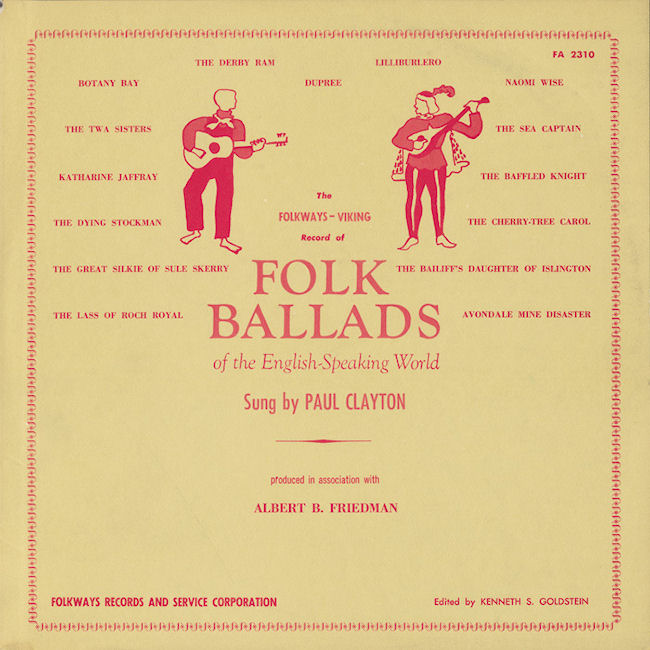


Volgens Dylan komt deze mooie melodie weer van Paul Clayton : “Paul was just an incredible songwriter and singer. He must have known a thousand songs. I learned ‘Pay Day at Coal Creek’ and a bunch of other songs from him. We played on the same circuit and I travelled with him part of the time. When you’re listening to songs night after night, some of them rub off on you. ‘Don’t Think Twice’ was a riff that Paul had. And so was ‘Percy’s Song.’

Wat betreft de tekst kan men gerust stellen dat Dylan te leen ging bij “The Wind and the Rain” (ook gekend als “Two Sisters”).
“Two loving sisters was a-walking side by side, Oh the wind and rain. One pushed the other off in the waters, waters deep. And she cried, “The dreadful wind and rain.”
The Wind and the Rain

“Bad news, bad news come to me where I sleep, Turn, turn, turn again. Sayin’ one of your friends is in trouble deep, Turn, turn to the rain and the wind”.
Percy’s Song

Het einde van de song is nog meer frappant :

“The only tune that my fiddle would play, was, “Oh, the wind and the rain.” The only tune that my fiddle would play, was  “The dreadful wind and rain.”
The Wind and the Rain

“And I played my guitar through the night to the day, Turn, turn, turn again. And the only tune my guitar could play was, “Oh the cruel rain and the wind.”
Percy’s Song.

The Two Sisters is een Appalachian variant op de oude Schotse ballad The Twa Sisters (Child #10). Oudste referentie als broadside ‘The Miller and The King’s daughter’ in 1656. Cecil Sharp vond een Mr. Westley Batten in 1916 met een versie van The Two Sisters. Mogelijk komt de song oorspronkelijk (17de eeuw) uit Noorwegen want daar bestaan verschillende varianten (als Dei To Systre).

Dit is een murderballad waarbij in de meeste gevallen de ene zus de andere verdrinkt. Even verderop vist een molenaar dat lijk op, maakt een muziekinstrument met het haar en gebeente, waarna spontaan dit lied begint te spelen, waardoor de akelige waarheid aan het licht komt.

De oudste versie is deze van Bradley Kincaid (1928).

Dylan zong de song in Karen Wallace’s appartement in St Paul (Minnesota) in Mei 1960.

Hier zijn de invloeden van Dylan :


Alan Lomax with Peggy Seeger, Guy Carawan, John Cole & Sammy Stokes – The Two Sisters.(1956)


Paul Clayton – The Two Sisters.(1956)


Bob Dylan : The two sisters (1960 Karen Wallace Tapes)


Bob Dylan - Percy's Song


Bob Dylan - Seven Curses (1963, 1964)

John Jacob Niles


Seven Curses (1963, 1964)

Old Reilly stole a stallion
But they caught him and they brought him back
And they laid him down on the jailhouse ground
With an iron chain around his neck

Old Reilly’s daughter got a message
That her father was goin’ to hang
She rode by night and came by morning
With gold and silver in her hand

When the judge he saw Reilly’s daughter
His old eyes deepened in his head
Sayin’, “Gold will never free your father
The price, my dear, is you instead”

“Oh I’m as good as dead,” cried Reilly
“It’s only you that he does crave
And my skin will surely crawl if he touches you at all
Get on your horse and ride away”

“Oh father you will surely die
If I don’t take the chance to try
And pay the price and not take your advice
For that reason I will have to stay”

The gallows shadows shook the evening
In the night a hound dog bayed
In the night the grounds were groanin’
In the night the price was paid

The next mornin’ she had awoken
To know that the judge had never spoken
She saw that hangin’ branch a-bendin’
She saw her father’s body broken

These be seven curses on a judge so cruel:
That one doctor will not save him
That two healers will not heal him
That three eyes will not see him
That four ears will not hear him
That five walls will not hide him
That six diggers will not bury him
And that seven deaths shall never kill him


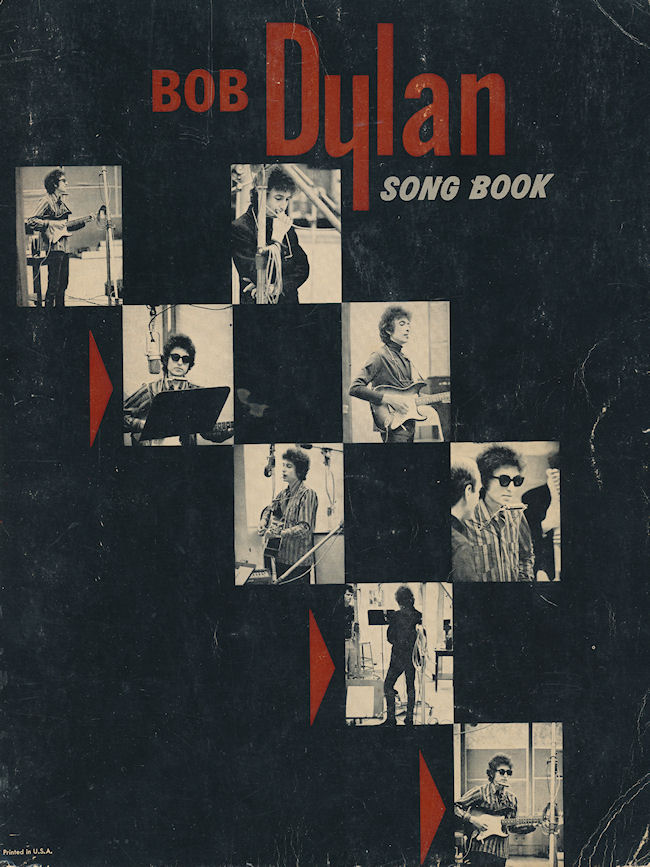
Nog zo’n Dylan song die ik leerde kennen via het “Dylan Songbook” van Witmark and Sons.

Deze song gaat terug op “Anathea” (Neil Roth, Lydia Wood) dat een gelijklopend verhaal vertelt.

Het verhaal is zo oud als de straat. Het is sinds eeuwen in de Angelsaksische folk traditie gekend onder varianten als ‘The Prickley Bush,’ ‘The Briery Bush,’ en ‘The Prickle Holly Bush”.

De vroegste versie zou wel eens Child Ballad number 95, ‘The Maid Freed From the Gallows’ kunnen zijn. Ik voeg deze ballad hierbij in de versie van John JacobNiles.

Ook Leadbelly’s “Gallows Pole” gaat hierop terug.

“Hangman, hangman, hangman / slack your rope awhile.
I think I see my father / ridin’ many a mile.
Father, did you bring any silver? / father, did you bring any gold,
Or did you come to see me / hangin’ from the gallows pole?”
“No, I didn’t bring any silver, / no I didn’t bring any gold.
I just come to see you / hangin’ from the gallows pole.”

Waarschijnlijk is dus dat Dylans direkte bron “Anathea” was, zoals Judy Collins dat zong.

Judy Collins : “Absolutely, the seven curses are related to Anathea. There are old themes, world themes, centuries’ old dramas that get worked out in the creative process by artist after artist. I see what Dylan has always done is to connect with this inner, subterranean river of the subconscious.”

Hier zijn dan :

1 John Jacob Niles -  The Hangman, or The Maid Freed from the Gallows


2 Judy Collins – Anathea


3 Bob Dylan – Seven Curses


zaterdag 7 april 2012

Dylan's "North Country Blues"


North Country Blues (1963)

Come gather ’round friends
And I’ll tell you a tale
Of when the red iron pits ran plenty
But the cardboard filled windows
And old men on the benches
Tell you now that the whole town is empty

In the north end of town
My own children are grown
But I was raised on the other
In the wee hours of youth
My mother took sick
And I was brought up by my brother

The iron ore poured
As the years passed the door
The drag lines an’ the shovels they was a-humming
’Til one day my brother
Failed to come home
The same as my father before him

Well a long winter’s wait
From the window I watched
My friends they couldn’t have been kinder
And my schooling was cut
As I quit in the spring
To marry John Thomas, a miner

Oh the years passed again
And the givin’ was good
With the lunch bucket filled every season
What with three babies born
The work was cut down
To a half a day’s shift with no reason

Then the shaft was soon shut
And more work was cut
And the fire in the air, it felt frozen
’Til a man come to speak
And he said in one week
That number eleven was closin’

They complained in the East
They are paying too high
They say that your ore ain’t worth digging
That it’s much cheaper down
In the South American towns
Where the miners work almost for nothing

So the mining gates locked
And the red iron rotted
And the room smelled heavy from drinking
Where the sad, silent song
Made the hour twice as long
As I waited for the sun to go sinking

I lived by the window
As he talked to himself
This silence of tongues it was building
Then one morning’s wake
The bed it was bare
And I’s left alone with three children

The summer is gone
The ground’s turning cold
The stores one by one they’re a-foldin’
My children will go
As soon as they grow
Well, there ain’t nothing here now to hold them

Deze song staat op het “The times they are a changin’” album.

De specifieke locatie van de stad wordt nooit vermeld.


Waarschijnlijk heeft Dylan het over de Iron Range in het noorden van Minnesota (gesuggereerd door de titel van het lied), waar Dylan zijn jeugd doorbracht in Hibbing, Minnesota.

De verwijzing naar “iron ore (ijzererts)” en “Red Iron (rode ijzer)” is overduidelijk.

De verdere verwijzing naar “red iron pits” geeft aan dat het gaat om de locatie zich op de Mesabi Range, een deel van de Iron Range, bevindt waar open-pit mining overweegt en waar ook Hibbing zich bevindt.

Dit gaat dus over Hibbing.

Het einde van de song is dramatisch.

Dylan verbergt het feit dat de verteller een vrouw is tot aan het eind van vers vier.
Het nummer eindigt somber. De vrouw is tegen die tijd haar man, moeder, vader en broer verloren, de mijn is gesloten en de stad is zo goed als verlaten. En al gauw zullen haar kinderen ook weggaan en zal zij achterblijven in volledige afzondering en eenzaamheid.

Waarschijnlijk haalde Dylan zijn inspiratie  (en ook een deel van de melodie trouwens)  bij de song van Bob Gibson uit 1958, “Red Iron Ore” (Riverside)

Het is een ballade uit de late 19e eeuw over de mijnstreek rond Hibbing.


Bob Gibson – Red Iron Ore (1958)


Bob Dylan – North Country Blues (1963)


 "North Country Blues" op het Newport Folk Festival van 1963.

The Clancy Brothers - The Leaving of Liverpool


Dylan's Farewell (1963)

Oh it’s fare thee well my darlin’ true
I’m leavin’ in the first hour of the morn
I’m bound off for the bay of Mexico
Or maybe the coast of Californ
So it’s fare thee well my own true love
We’ll meet another day, another time
It ain’t the leavin’
That’s a-grievin’ me
But my true love who’s bound to stay behind

Oh the weather is against me and the wind blows hard
And the rain she’s a-turnin’ into hail
I still might strike it lucky on a highway goin’ west
Though I’m travelin’ on a path beaten trail
So it’s fare thee well my own true love
We’ll meet another day, another time
It ain’t the leavin’
That’s a-grievin’ me
But my true love who’s bound to stay behind

I will write you a letter from time to time
As I’m ramblin’ you can travel with me too
With my head, my heart and my hands, my love
I will send what I learn back home to you
So it’s fare thee well my own true love
We’ll meet another day, another time
It ain’t the leavin’
That’s a-grievin’ me
But my true love who’s bound to stay behind

I will tell you of the laughter and of troubles
Be them somebody else’s or my own
With my hands in my pockets and my coat collar high
I will travel unnoticed and unknown
So it’s fare thee well my own true love
We’ll meet another day, another time
It ain’t the leavin’
That’s a-grievin’ me
But my true love who’s bound to stay behind

I’ve heard tell of a town where I might as well be bound
It’s down around the old Mexican plains
They say that the people are all friendly there
And all they ask of you is your name
So it’s fare thee well my own true love
We’ll meet another day, another time
It ain’t the leavin’
That’s a-grievin’ me
But my true love who’s bound to stay behind

Dylan schreef de song in January 1963.

Deze song was ook een outtake voor “The Times they are a Changin’”. Dylan nam de song op in Maart 1963 als een demo voor “Witmark & Sons”.

In april 1964 verscheen de song in “Broadside Magazine”, weer gebaseerd op een traditional : “The leaving of Liverpool”

Dylan’s song is zo gelijklopend dat we hier eerder moeten spreken van een bijna-kopie.

Farewell to you, my own true love;
I am going far away.
I am bound for Californ-i-a,
And I know that I’ll return someday.
So fare thee well, my own true love,
And when I return, united we will be.
It’s not the leavin’ of Liverpool that grieves me,
But, my darling, when I think of thee

En

Oh it’s fare-thee-well, my darlin’ true,
I’m a-leavin’ in the first hour of the morn.
I’m bound off for the Bay of Mexico,
Or maybe the coast of Cal-i-forn.
So it’s fare-thee-well, my own true love,
We’ll meet an-other day, an-other time;
It’s not the leavin’ that’s a-grievin’ me,
But my darlin’ who’s bound to stay behind

Hier zijn : 

“The leaving of Liverpool” door The Clancy Brothers


“Farewell” door Bob Dylan (Witmark Demo)


Dominic Behan – The Patriot Game


Hoewel Dylan zegt dat "With God on Our Side" een originele song is van hemzelf, is het toch interessant te weten wat Liam Clancy hierover te zeggen heeft.

“‘The Patriot Game’ was written by Dominic Behan, but it was originally a song from the Appalachian Mountains (‘The Merry Month Of May’). Then it became a popular song, slightly adapted by a popular singer of the day named Joe Stafford who called it the – What was it called? ‘The Bold Grenadier,’ or something.

And it was from that popular recording that Dominic Behan took the tune and he made it into ‘The Patriot Game.’

And of course we used to sing this with great passion at the folk clubs in the (Greenwich) Village. And among the patrons was a young singer/songwriter who came into town named Bob Dylan. And he transformed it, of course, into ‘With God on Our Side.’”

In de introductie tot de song op het Newport Folk Festival in 1963 heeft Dylan het volgende  te vertellen :

“Yeah. You know, Jean Redpath sang a song here awhile ago which I heard Liam Clancy sing about two years ago and I was listening to her sing it and I thought that I never, uh, I thought I wrote this song called With God On Your Side. And it must have somewhere stayed in the back of my mind hearing Liam Clancy singing The Patriot Game.”

Meer moet dat niet zijn.

Hier zijn :

1. Dominic Behan – The Patriot Game


2. The Clancy Brothers – The Patriot Game